When someone collapses unexpectedly, every second counts. Sudden Cardiac Arrest (SCA) and heart attacks are two of the most common and most deadly medical emergencies in Australia and around the world.
People are often confused to understand the difference between cardiac arrest and vs heart attack.
A Heart Attack occurs when blood flow to a part of the heart is blocked, often due to a clot. On the other hand, sudden Cardiac Arrest (SCA) is when the heart unexpectedly stops beating altogether, often due to an electrical malfunction. Let’s understand them in detail.
Along with understanding key differences, you will also learn about the best ways to learn first aid and how Business Wise First Aid Training (BWFAT) can help you acquire the necessary first aid skills.
Let’s get started.
Heart Attack vs. Sudden Cardiac Arrest: What’s the Difference?
Although they are both serious heart-related emergencies, a heart attack and sudden cardiac arrest are not the same.
- A Heart Attack occurs when blood flow to a part of the heart is blocked, often due to a clot. The heart continues to beat, but the muscle is being damaged due to a lack of oxygen.
- Sudden Cardiac Arrest (SCA) is when the heart unexpectedly stops beating altogether, often due to an electrical malfunction. This stops blood flow to the brain and body, and it can lead to death within minutes if untreated.
Understanding the difference is critical because first aid responses differ for each, and knowing what to do can truly mean the difference between life and death.
Signs and Symptoms of a Heart Attack
A heart attack may occur suddenly, but often there are warning signs leading up to it. Recognising them early is key to preventing further damage or fatal outcomes.
Common signs include:
- Chest pain or discomfort (tightness, pressure, or squeezing sensation)
- Pain radiating to the arm, jaw, back, or neck
- Shortness of breath
- Sweating (often cold sweat)
- Nausea or vomiting
- Light-headedness or fainting
- A sense of doom or anxiety
Symptoms can vary between individuals. For example, women may experience more subtle symptoms such as fatigue, indigestion-like pain, or upper back discomfort.
Signs and Symptoms of Sudden Cardiac Arrest
Unlike a heart attack, SCA strikes suddenly and without warning. The person may collapse and become unresponsive within moments.
Key signs include:
- Sudden loss of responsiveness
- No normal breathing
- No pulse or signs of circulation
- Sometimes, seizure-like movements or gasping may occur right after collapse
Sudden cardiac arrest is an immediate, life-threatening emergency. Without prompt CPR and defibrillation, survival rates decrease by 7–10% every minute.
First Aid for Heart Attack
- Call Emergency Services on 000 in Australia. Immediately call for an ambulance. Time is critical.
- Keep the Person Calm and Seated. Help them to sit in a comfortable position and stay calm. Reassure them while waiting for help.
- Loosen Tight Clothing. Loosen anything around the neck or chest that may restrict breathing.
- Give Aspirin (If Advised and Not Allergic). If the person is conscious and not allergic, chewable aspirin can help thin the blood. Only do this if you’re trained and the person agrees.
- Monitor Closely. Watch for signs of cardiac arrest. If they become unresponsive or stop breathing, begin CPR immediately.
First Aid for Sudden Cardiac Arrest
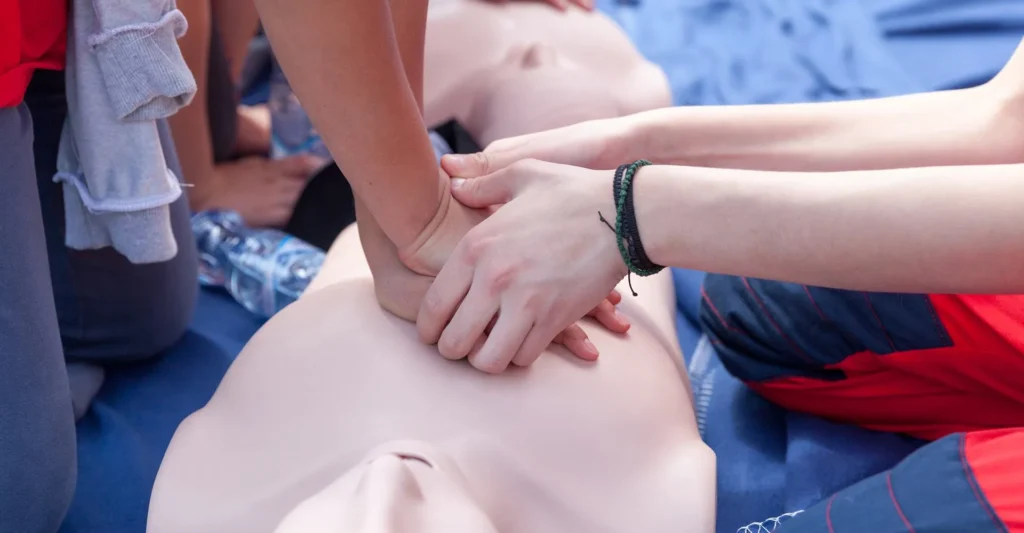
- Start CPR Immediately
- Begin chest compressions:
- Push hard and fast in the centre of the chest (at least 100–120 compressions per minute).
- Let the chest rise fully between compressions.
- If trained, alternate with rescue breaths (30:2 ratio).
- Begin chest compressions:
- Continue CPR Until Help Arrives
- Don’t stop unless the person starts to move or emergency professionals take over.
Importance of first aid & why choose Business Wise First Aid Training (BWFAT)?
In both heart attacks and cardiac arrests, early intervention saves lives. But without training, most people freeze, hesitate, or panic. CPR and AED use are practical skills that require confidence, which only comes from hands-on training.
At Business Wise First Aid Training, we specialise in practical, real-world training that gives you the confidence to act. Whether you’re an individual, part of a business team, or a community group, our nationally recognised courses are designed to empower you with the skills that matter.
- CPR & AED training
- Hands-on practice with real-life scenarios
- Courses tailored to workplaces, educators, parents & more
- Online and on-site learning options are available
- Trusted by thousands across Newcastle and beyond since 2003
Book your first aid training today!